I. Engraver
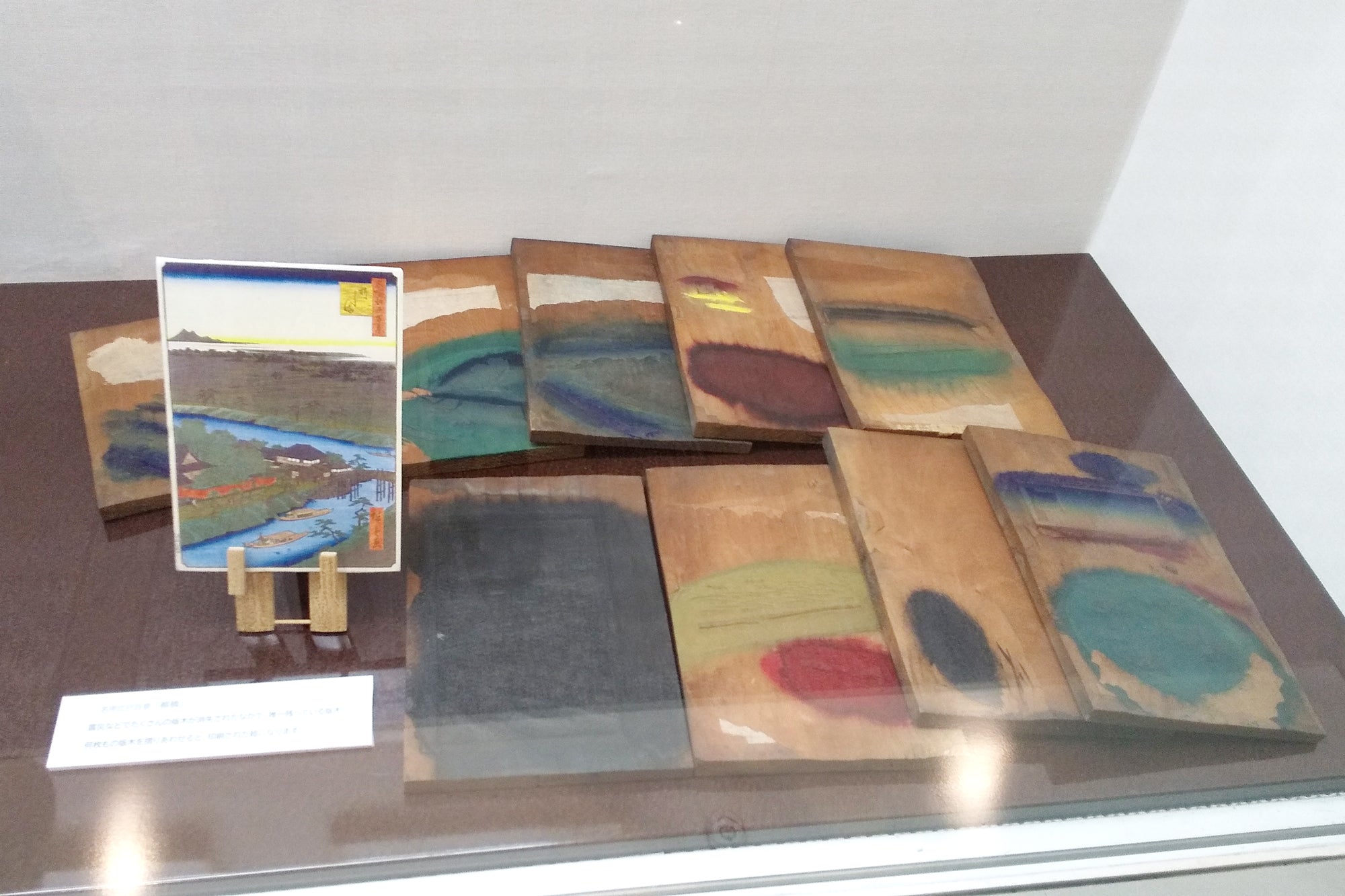
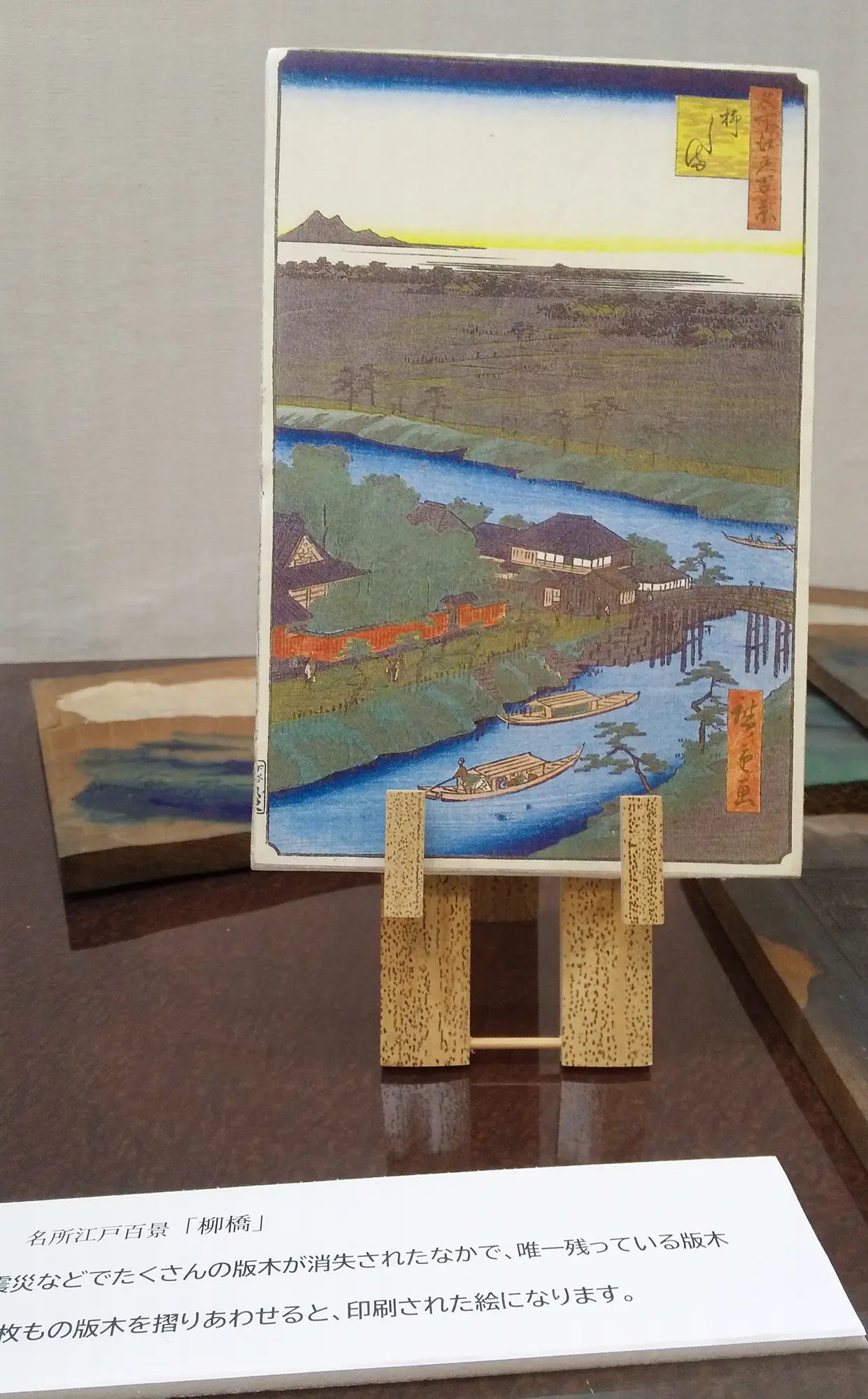
A woodcarver is a craftsman who creates the woodblocks for ukiyo-e prints and possesses the skills to produce blocks with the distinctive colors and textures characteristic of ukiyo-e.
Since woodblock printing uses relief printing, the artist leaves only the areas where pigment is to be applied uncarved. To achieve this, the artist makes incisions on both sides of the outline with a small knife and carves away the unnecessary parts with a chisel.Fine details, such as hair-like lines and hair-like carvings, are generally entrusted to the woodcarver rather than the artist.
Only those outline-only proofs—drawn by the artist and approved by the publisher—that meet strict quality standards are used as the basis for the woodblocks, which are then produced using carving techniques.
The artist specifies the colors on the proof print and returns it to the engraver. The engraver carves the color blocks, separating them by color, though colors covering a small area may be combined onto a single block. Once all the color blocks are complete, the printer finishes the print.
2. Printers (Surishi)
A "surishi" is a printmaker who creates nishiki-e using advanced paper-printing techniques and multicolor printing with carefully selected pigments.
For the main print (omohan), ink or pigments are applied to a woodblock—on which the engraver has carved the outline—using a brush; moderately dampened paper is then placed on top. The paper is secured with markers, and the print is produced using a sturdy printing block holder.
The “ma-ren” is crafted by the printer using a handmade “core” of wood or bamboo, onto which layers of shibugami paper are glued and hardened with lacquer. A “covering skin” that encompasses the core is then applied, and the whole is wrapped in a “wrapping skin” made of bamboo bark.
Afterward, a color block is used to create a multicolor print. A separate woodblock is required for each color, though blocks for smaller areas may be shared with other color blocks. The “baren” is used to ensure the blocks do not shift during printing.Techniques include “sora-zuri,” which creates a textured effect that highlights the base color, and “bokashi,” in which the woodblock is moistened before pigment is rubbed into it to create a blurred, blended effect.
III. The Process of Making folding fan
Here, using Edo fan as an example, we provide easy-to-understand video tutorials on the folding fan-making process.
“1. Making the Main Ribs”
“2. Preparing the Base for the Fan Face”
“3. Creating the Fan Face”
“4. Folding”
“5. Finishing”
All production processes require advanced skills and experience.
Feature: “How a Fan Is Made” > Click here to view “How folding fan Is Made”